The Loveliest and Saddest Landscape
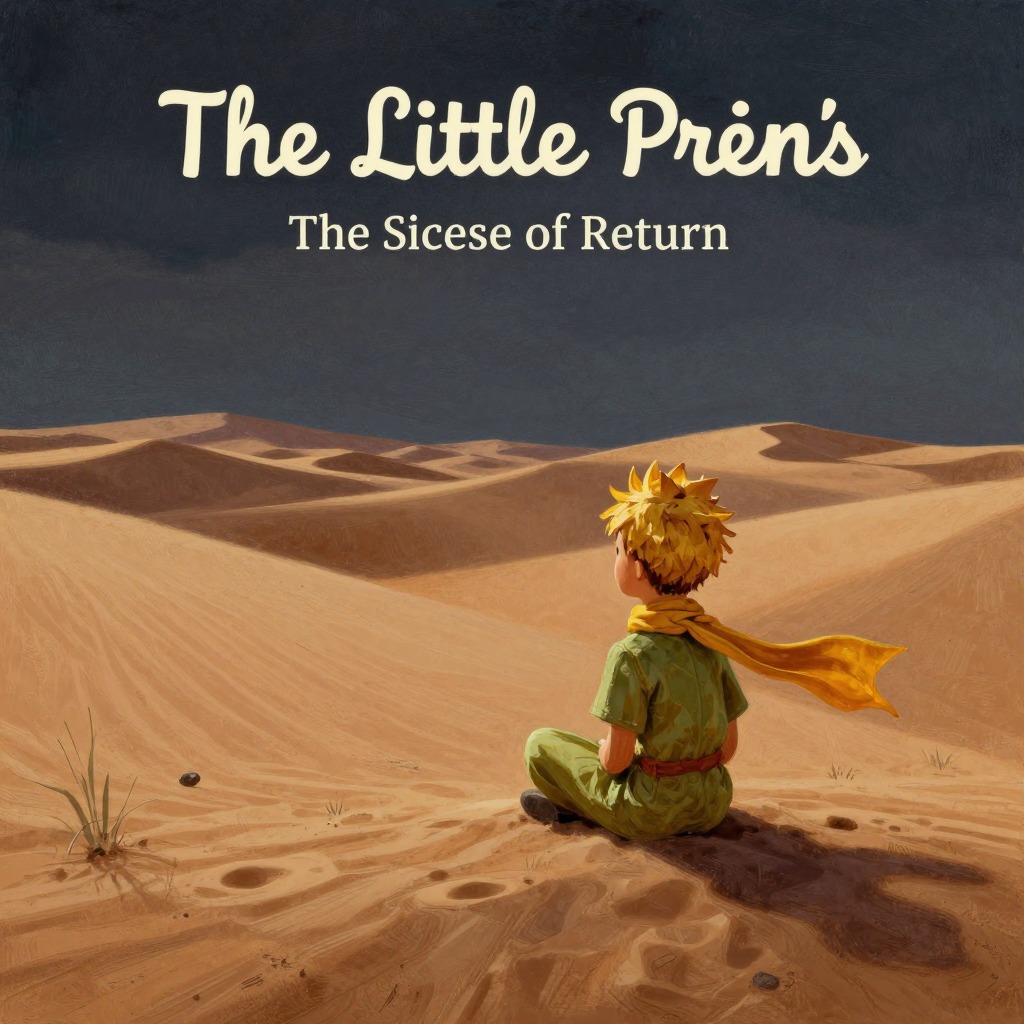
The Loveliest and Saddest Landscape is the African desert spot where the Little Prince appeared on Earth and disappeared. The Narrator calls it "the loveliest and saddest landscape in the world," and he redraws it on the page to impress it on the reader's memory. The landscape is not merely a geographical location; it is the emotional and symbolic heart of the story's ending, a place where joy and sorrow are inseparable, and where the fate of a sheep and a rose determines the meaning of the universe.
The Place and Its Double Nature
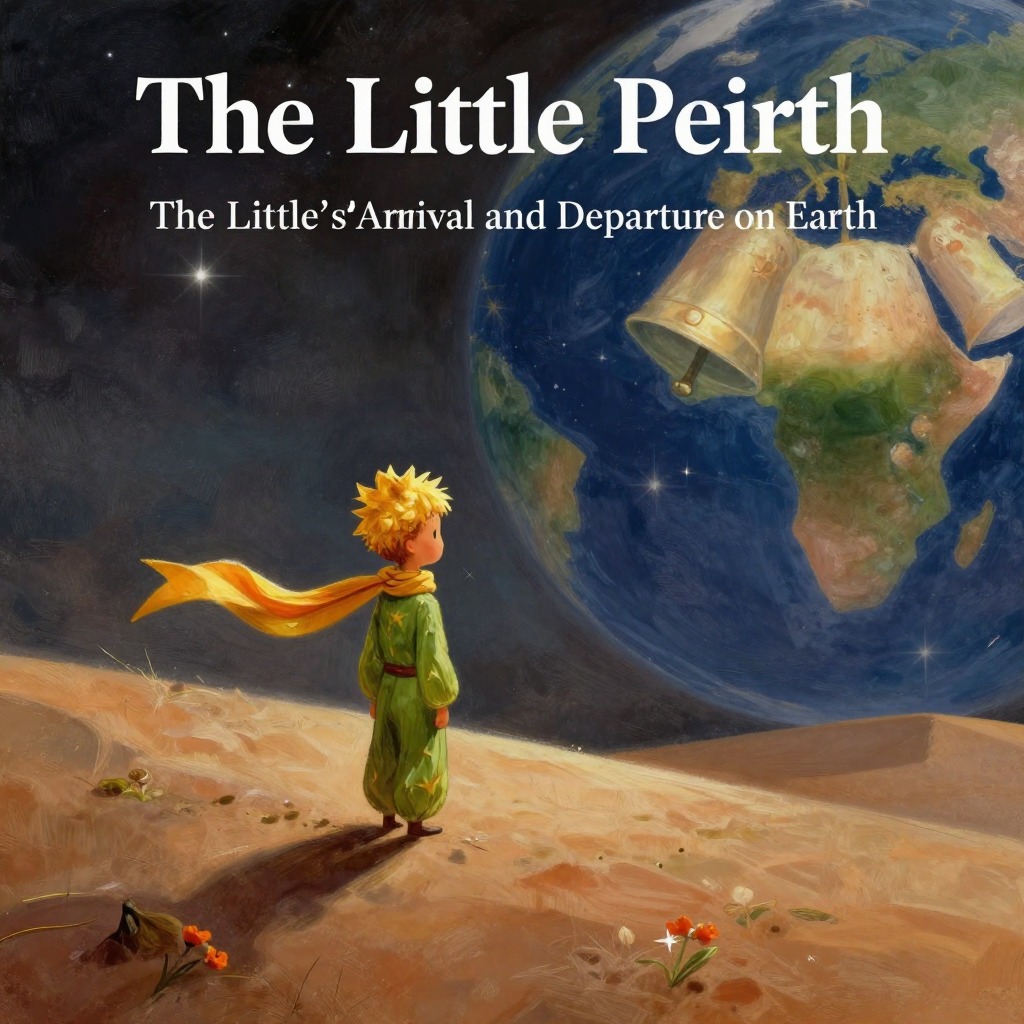
The landscape is the same as that on the preceding page, but the Narrator has drawn it again, deliberately, so that it will be remembered. It is here, in the African desert, that the Little Prince appeared on Earth and disappeared. The place is thus defined by two opposite events: an arrival and a departure, a beginning and an end. The Narrator's description of it as both "loveliest" and "saddest" captures this duality. It is lovely because it is where the Little Prince was present, where the Narrator met him and heard his story; it is sad because it is where he vanished, leaving the Narrator alone with his grief and his unanswered questions. The landscape is a physical reminder of the Little Prince's brief time on Earth, and its beauty is inseparable from its loss.
The Narrator's act of redrawing the landscape is itself significant. He does not simply describe it; he recreates it, as if to fix it in the reader's mind and in his own. He says, "I have drawn it again to impress it on your memory," suggesting that the place is so important that it must be remembered exactly. This repetition also mirrors the Narrator's own obsessive return to the memory of the Little Prince, a memory he has carried for six years without telling anyone. The landscape is thus not just a place but a mental image, a site of memory that the Narrator revisits again and again.
The Mystery of the Sheep and the Rose
The landscape is also the stage for the story's central unresolved mystery: whether the sheep has eaten the flower. The Narrator explains that when he drew the muzzle for the Little Prince, he forgot to add the leather strap, so the Little Prince will never have been able to fasten it on his sheep. This small oversight—a forgotten strap—becomes the source of endless speculation. The Narrator wonders, "what is happening on his planet? Perhaps the sheep has eaten the flower . . ." The flower is the Little Prince's rose, the one he loved and cared for, and its fate is now uncertain.
The Narrator oscillates between two possibilities. At one time he tells himself, "Surely not! The little prince shuts his flower under her glass globe every night, and he watches over his sheep very carefully . . ." In this hopeful version, the Little Prince is diligent, and the rose is safe. Then he is happy, and "there is sweetness in the laughter of all the stars." But at another time he thinks, "At some moment or other one is absent-minded, and that is enough! On some one evening he forgot the glass globe, or the sheep got out, without making any noise, in the night . . ." In this darker version, a single moment of carelessness could lead to disaster. Then "the little bells are changed to tears." The landscape, with its silent desert and its starry sky, becomes the backdrop for this inner turmoil. The stars, which the Narrator loves to listen to at night, are transformed by his mood: they are either "five hundred million little bells" or the source of tears.
The mystery is framed as a question that the reader must answer: "Look up at the sky. Ask yourselves: is it yes or no? Has the sheep eaten the flower? And you will see how everything changes . . ." The Narrator insists that this is a matter of great importance, even though "no grown-up will ever understand" it. The landscape is thus not just a place of memory but a place of existential uncertainty, where the fate of a single rose on a distant planet determines the emotional color of the entire universe.
The Narrator's Grief and the Passage of Time
The landscape is also the site of the Narrator's grief, which he has carried for six years. He reveals that he has "never yet told this story" until now. When he returned from the desert, his companions were "well content to see me alive," but he was sad, and he told them only, "I am tired." This lie—or at least this understatement—hides the depth of his loss. The landscape is where he lost the Little Prince, and it is where he must return in memory to confront that loss.
The Narrator's sorrow is "comforted a little," but not entirely. He knows that the Little Prince did go back to his planet, because he did not find his body at daybreak. The Little Prince's body was "not such a heavy body," suggesting that his departure was not a death in the ordinary sense but a return to his own world. Yet the absence of a body does not erase the pain of separation. The Narrator is left with the landscape, the stars, and the endless question of the sheep and the rose.
The landscape is thus a place of both presence and absence. The Little Prince appeared there, and he disappeared there. The Narrator's memory of the place is a way of keeping the Little Prince alive, even as he acknowledges that he is gone. The redrawing of the landscape is an act of remembrance, a way of holding onto what has been lost.
The Landscape as a Call to the Reader
The Narrator ends his description of the landscape with a direct appeal to the reader. He asks the reader to look at the drawing carefully, so that they will recognize it if they ever travel to the African desert. He instructs: "If you should come upon this spot, please do not hurry on. Wait for a time, exactly under the star." Then, if a little man appears who laughs, who has golden hair, and who refuses to answer questions, the reader will know who he is. The Narrator begs: "please comfort me. Send me word that he has come back."
This appeal transforms the landscape from a private memory into a shared hope. The Narrator cannot know for certain what has happened on the Little Prince's planet, but he can ask others to watch for him. The landscape becomes a place of potential reunion, a spot where the Little Prince might appear again. The description of the Little Prince—laughing, with golden hair, refusing to answer questions—is a vivid portrait that the reader is meant to recognize. The refusal to answer questions is a characteristic trait, suggesting that the Little Prince's mystery is part of his nature.
The landscape is thus not only the loveliest and saddest place in the world but also a place of waiting. The Narrator waits, and he asks the reader to wait with him. The stars, the desert, and the memory of the Little Prince all converge on this spot. It is a place where the boundary between the ordinary world and the extraordinary is thin, where a little man with golden hair might appear at any moment. The landscape is a testament to the power of love and loss, and to the hope that what is lost may one day be found again.